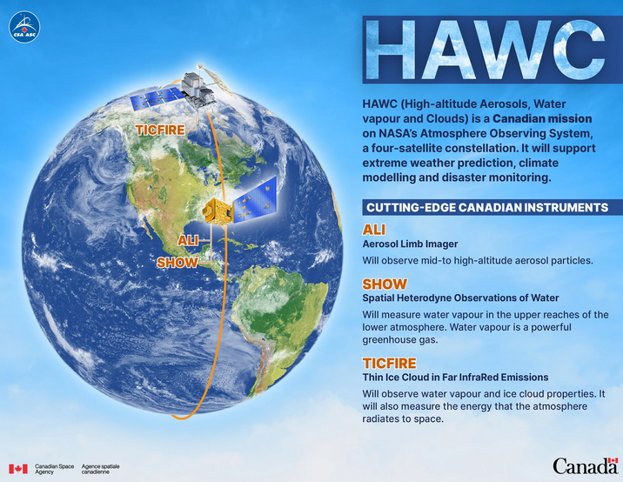
The Polar Night Experiment (ECALOT) Aircraft Campaign for the Atmospheric Observing System Satellite Mission
Background:
The Polar regions are an integral part of the Earth's energy budget and climate.
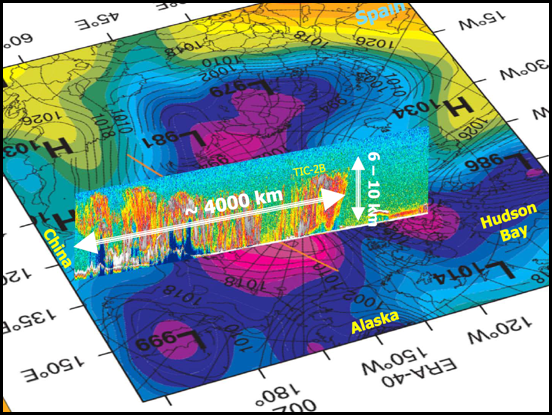
Clouds are an important climate component modulating radiation transfer and the hydrological cycle.
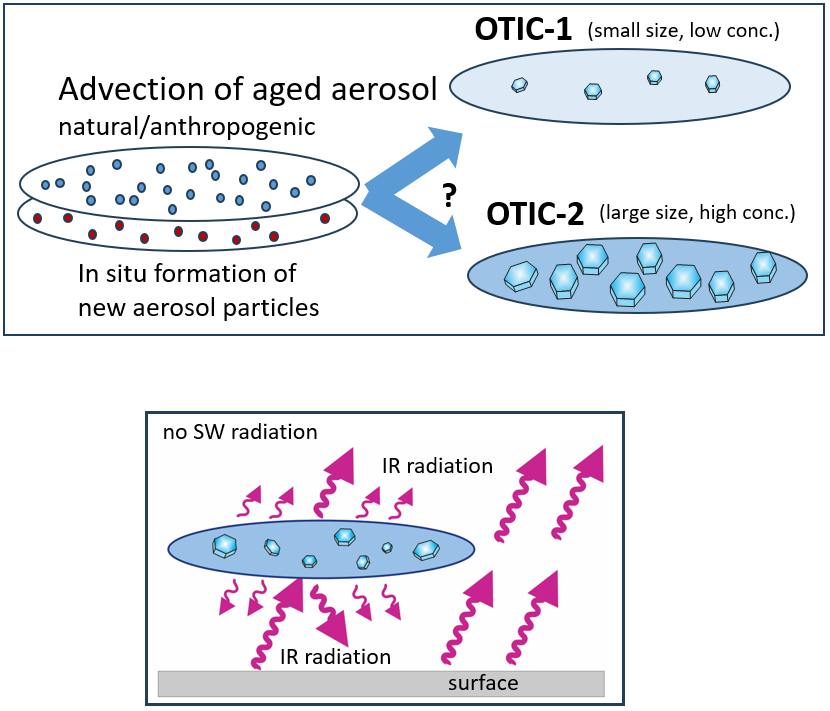
Arctic ice cloud formation during winter is poorly understood due to lack of observations and their remoteness.
Arctic cloud formation is strongly related to aerosol-cloud interaction processes.
Large concentrations of aerosols in the Arctic during winter are associated with long-range transport of anthropogenic aerosols from the mid-latitudes.
Ice clouds result in the dehydration of the troposphere and change of the radiation regime and strong radiative cooling of the surface.
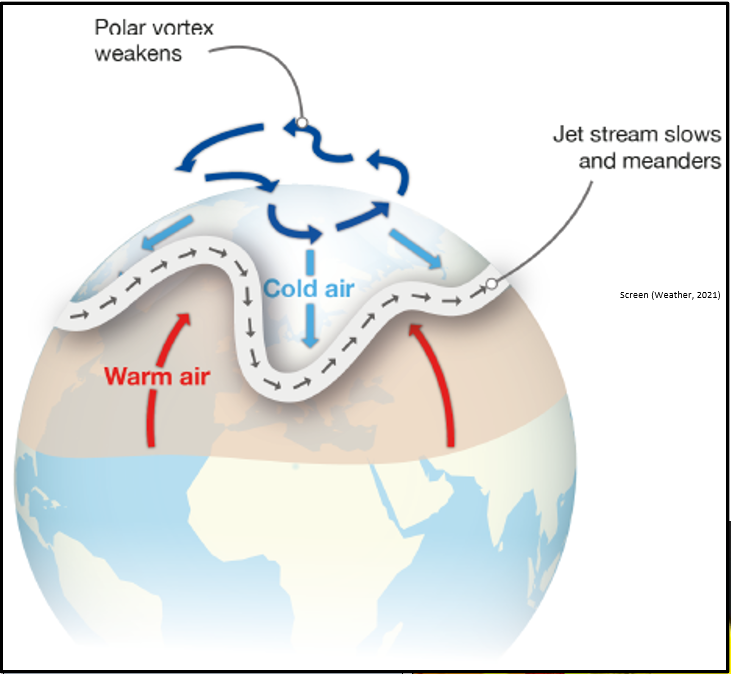
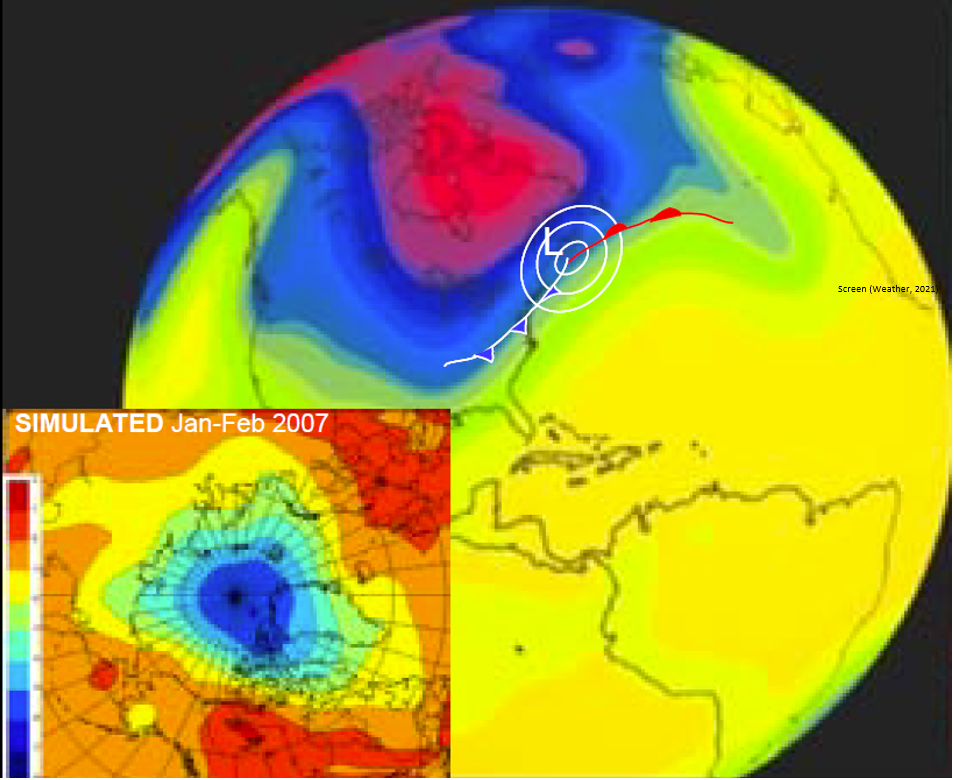
Rapid Arctic warming weakens the polar vortex, allowing cold air to move south and warm air to shift north.
Cold air gradients fuel intense winter storms and severe weather.
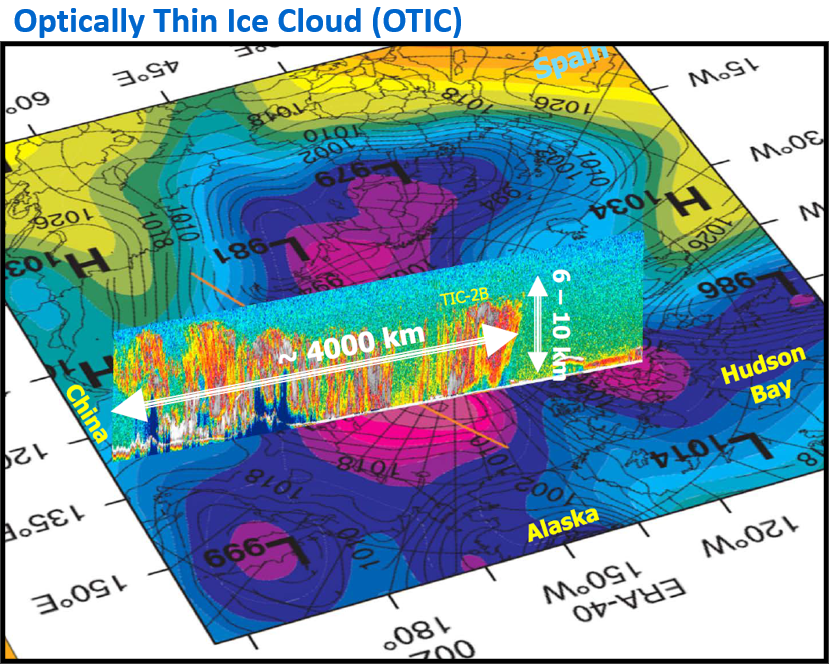
How do natural and human-made aerosols, including sulfuric acid and newly formed particles, influence the formation and composition of OTICs during polar night?
Radiative properties and formation mechanisms of OTIC during polar night remain poorly understood.